Hello! This is Yoshimoto from Circles Tokyo!
In my previous blog post, I wrote about custom handmade frames designed with the theme of "thinking about your bicycle in line with the road," imagining changing environments, riding styles, and the places you want to go.
The act of "thinking about your bicycle in line with the road" isn't limited to full-custom frames. A bicycle is an assembly of various parts, and assembling those parts to match the roads you ride is extremely important. Among those, the part most directly linked to the environment you want to ride in is the tires.

Personally, whenever I receive an order for a new bike at the shop, I prioritize deciding "what kind of tires to use" first, and then work backward to determine the bike model and frame geometry.
Out of the countless parts that make up a bicycle, the only one that comes into direct contact with the road surface is the "tire." It is the part with the most diverse range of needs and the widest variety of options, as it must adapt to different road surfaces and riding styles.


The choice of tire width and tread pattern is the most significant factor in determining where you can ride and what the ride quality will be like. I believe that where a rider goes most often, or where they wish to go, is clearly reflected in their choice of tires.
Furthermore, there is one more essential element to unlocking the potential of your chosen tires: **"tire pressure."** Depending on your pressure management, the ride feel and propulsion can vary significantly, even with the exact same tires. Today, I'd like to talk about tire pressure.

Considering Optimal Tire Pressure
When I take in bicycles for repairs or maintenance, I always ask the customer, "What tire pressure do you usually run?" The most common answers are "I don't really have one," or "I just pump them up to the maximum pressure written on the sidewall."
It feels like the practice of lowering tire pressure for unpaved roads, like gravel, has become quite common. However, I think we should be just as particular about the tire pressure we use on the asphalt we ride every day, not just on unpaved surfaces.


This is the text found on the sidewalls of two types of tires:
・TUBED MAX 525kPa(5.3bar 75psi)
TUBELESS MAX 400kPa(4.0bar 60psi)
・250-410 kPa (35-60psi/2.5-4.1bar)
The top shows the "maximum pressure" for both tube-type and tubeless setups.
The bottom indicates the range within which the tire should be used.
Many people pump their tires up to these maximums, but these numbers only represent limit values or the range for guaranteed safety—they are never the "optimal solution" for you.
If you were riding on a perfectly maintained track like a velodrome, running high pressures exceeding 10 bar would be the right choice. However, the city streets we ride on every day are often damaged by heavy traffic and full of patched-up sections. Even on pavement, you'll frequently find conditions that are nearly as rough as gravel.
In such environments, if your tires are pumped to high pressure and are too hard, they cannot flexibly absorb the road irregularities, causing the bike to bounce.
In this state, the energy intended for moving forward is actually converted into vertical movement, or the tires lose contact with the ground, preventing propulsion from being transmitted effectively, which results in energy loss. Needless to say, it’s also a harsh ride!
The old belief that high-pressure, narrow tires were faster stems from testing performed on smooth rollers. Recent scientific research, accounting for real-world road conditions, has shown that slightly wider tires at optimal low pressures have less resistance.
With the spread of tubeless setups, lower pressures in the 4 to 5 bar range have become standard even in professional road racing.
What should you base your tire pressure on?
So you understand there is an optimal tire pressure, but you might be thinking, "The tire only says the maximum pressure, so how do I figure out the right one?" In that case, I recommend this tool.

SRAM Tire Pressure Guide https://axs.sram.com/guides/tire/pressure
Optimal pressure varies depending on complex factors like your body weight, expected road conditions, tire casing, and rim internal width. That is why it is important to know a reliable baseline value that doesn't rely on guesswork.
Just input your weight, bike weight, rim internal width, tire type, and the road conditions you frequent into this tool, and it will logically calculate the recommended front and rear tire pressures. Start by using these values as your baseline.
Using that as a base, ride the same route and make fine adjustments in increments of 0.2 to 0.5 bar. This will help you find the optimal pressure for your setup, and you'll find that even on the same route, a different pressure creates a completely different feeling.
In my case, when I input the values for the SEVEN Evergreen I introduced in my last blog into the SRAM Tire Pressure Guide, it suggests 1.99 bar front and 2.12 bar rear. However, since my "gravel" rides inevitably include a significant portion of on-road, I find that slightly higher pressures of around 2.2 bar front and 2.3 bar rear work best for my local gravel-mix routes.
"Even the finest musical instrument won't produce its true sound just as it was made. It only happens once it has been 'properly tuned' by a 'skilled performer'."


This is a line from the manga *Wangan Midnight*, which depicts street racers competing on the Shuto Expressway at speeds over 300 km/h. It is the story of the protagonist, Akio Asakura, who drives the "Devil Z" (an S30 Fairlady Z), but it is also a masterpiece that depicts the philosophy and pride of the tuners who work with these machines.
I believe this tuner's perspective applies deeply to bicycles, which are also vehicles that we entrust our lives to. No matter how precisely a frame is crafted or how high-performance and expensive the tires you assemble are, you will never unlock their true potential if they aren't properly "tuned" to the rider's weight and environment.
Adjusting tire pressure is that very act of tuning. The daily chore of pumping up your tires is perhaps the most familiar and effective form of tuning that anyone can perform without cost.

Adding air to your tires. If you approach this daily task with a structural perspective, it becomes a proper "tuning" session that optimizes the point where the road and rider meet.
Once you find the optimal balance between ride comfort and rolling resistance, you will clearly feel the tires gripping the road even in corners, allowing you to control the bike with confidence.
I believe that a bicycle is not a 100% finished product when it leaves the shop. You must set the tire pressure according to your body weight and the environment you ride in. Only then does it approach its "finished" state for you.
With just one simple pressure adjustment, the quality of the ride on the same path can change completely. Stop pumping them until they're rock hard; instead, start by getting a pump with a high-precision, large gauge.
If you have a reliable, serviceable measuring tool, you can logically explore "your own perfect tire pressure" through your daily rides. Understanding the structure of your bicycle and going through the process of tuning to maximize its potential is part of the fun of owning these tools. Please give it a try!
Recommended Floor Pumps


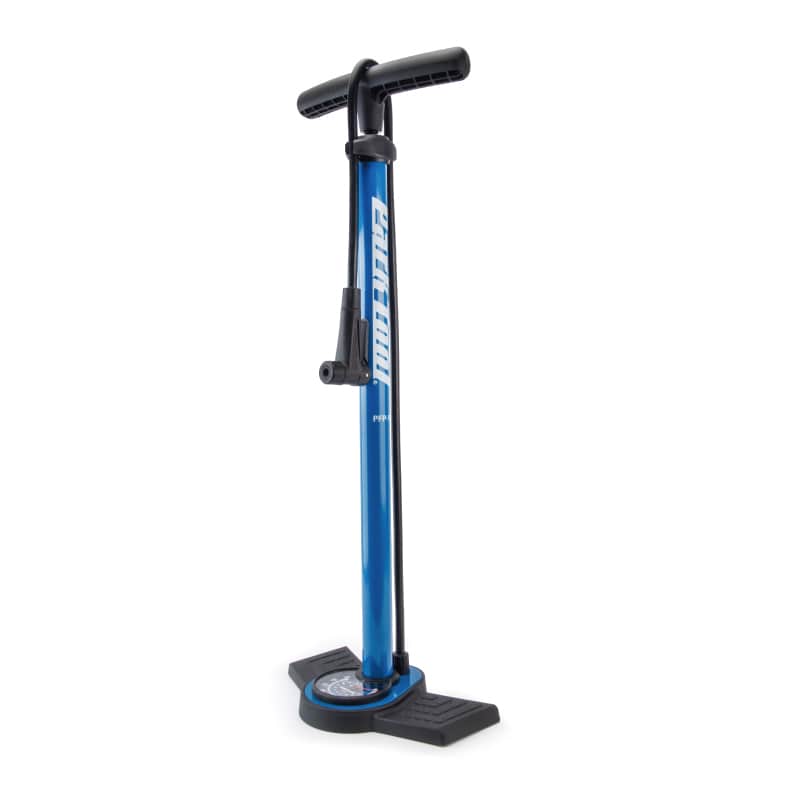
PARKTOOL Home Mechanic Floor Pump (PFP-10)
A sturdy, reliable pump that has been used in many shops for years. Its simple, robust structure and the availability of spare parts mean you can continue using it and repairing it for years to come. It’s a prime example of a reliable tool with universal value.


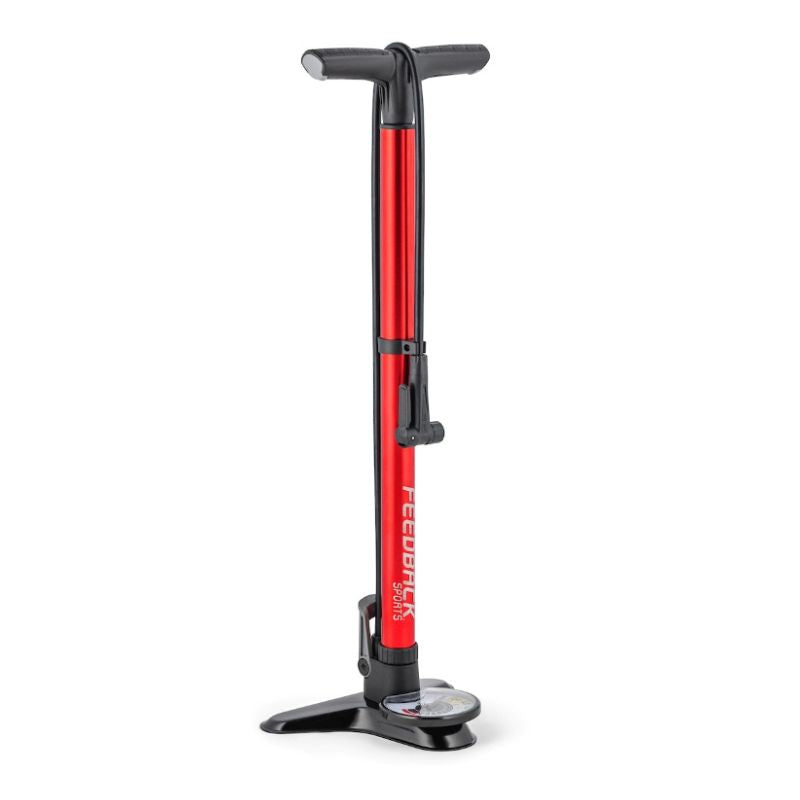
FEEDBACK Pneuma CC Floor Pump
A floor pump equipped with an air-boost feature, capable of seating tubeless tires. It functions as a standard floor pump for daily use, but provides an immediate burst of air from its built-in tank when needed. A dependable pump that handles everything from daily pressure management to tubeless setup in one unit.


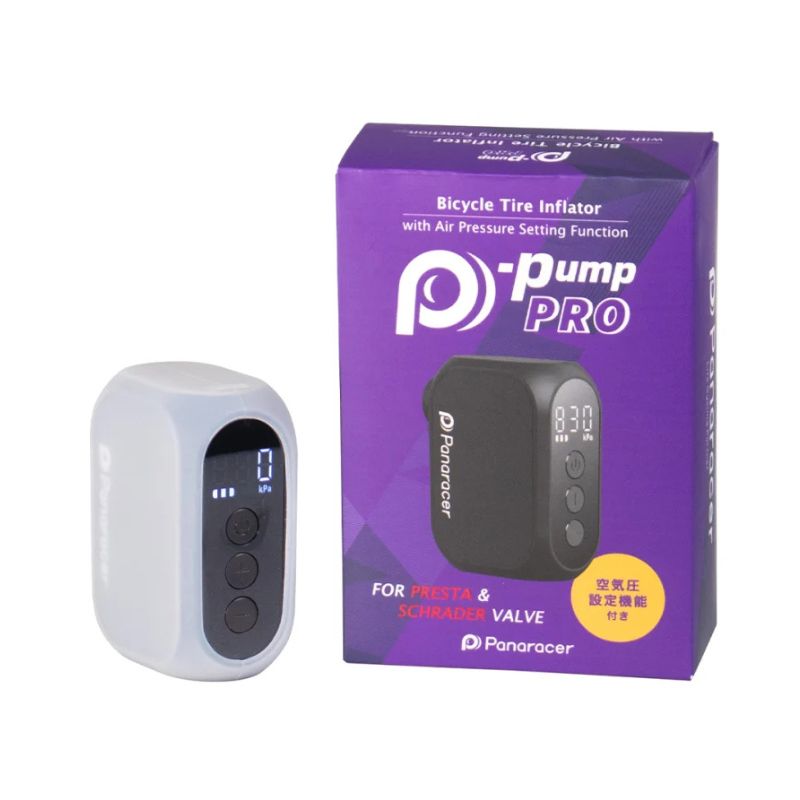
PANARACER P-pump Pro
Various types of small electric pumps have been released recently. You can set the desired pressure and it will automatically inflate to that level. The noise and the need for charging are minor drawbacks, but it is very convenient.


SKS Rennkompressor Floor Pump
A classic German-made floor pump loved for years since its inception in 1925. It features a sturdy steel body and a stable wooden base, offering simplicity and high durability. Its reliable quality allows it to be used for a lifetime, with maintainability that lets you replace parts as needed. It truly deserves to be called a "tool for life."