
A.DUGAST Pipisquallo Clincher
¥12,320
¥17,600


Founded in 1972 by André Dugast, this brand specializes in hand-stitched, handmade tires. Today, they are produced in the Netherlands by Richard Nieuwhuis, who has inherited both the company name and its technical expertise. Richard travels to bicycle race venues around the world to gather feedback from top riders and incorporate it into his product development. For Dugast, the quality of a tire is not defined solely by being "handmade." They are crafted using a method that carefully selects materials to leverage the "supple ride" characteristic of natural materials, and this unique ride quality has earned the support of many world champions. Latex tubes are used in the inner tubes of all tires to ensure that this ride quality is never compromised.
Since 2021, A.Dugast has expanded production to Thailand, where Vittoria’s world-class manufacturing facilities are located, seamlessly integrating traditional craftsmanship with cutting-edge technology. The Thai craftspeople have absorbed Richard's invaluable knowledge and continue to uphold the tradition of excellence in the production of A.Dugast tires. This significant step ensures that the spirit of A.Dugast is passed on, resulting in the creation of a facility that combines Thai craftsmanship with environmentally conscious, carbon-neutral production.

Invented and first used by A.Dugast, the Neoprene coating is a special protective layer applied to A.Dugast tires to prevent the tire casing from absorbing moisture and mud, thereby extending its lifespan. The Neoprene coating is a 0.1 mm thick silicone layer applied to the tire casing with a brush, filling the gaps between the threads.
This coating prevents water and mud from penetrating the casing and protects the casing material from degradation by harsh cleaners. Thanks to the Neoprene coating, Dugast tires are easier to clean and last longer. More importantly, the coating does not affect the tire's performance or comfort.
It is important to wash the tubulars after use (using water and/or soap, but do not use harsh products) and let them dry at room temperature (approximately 20 degrees).
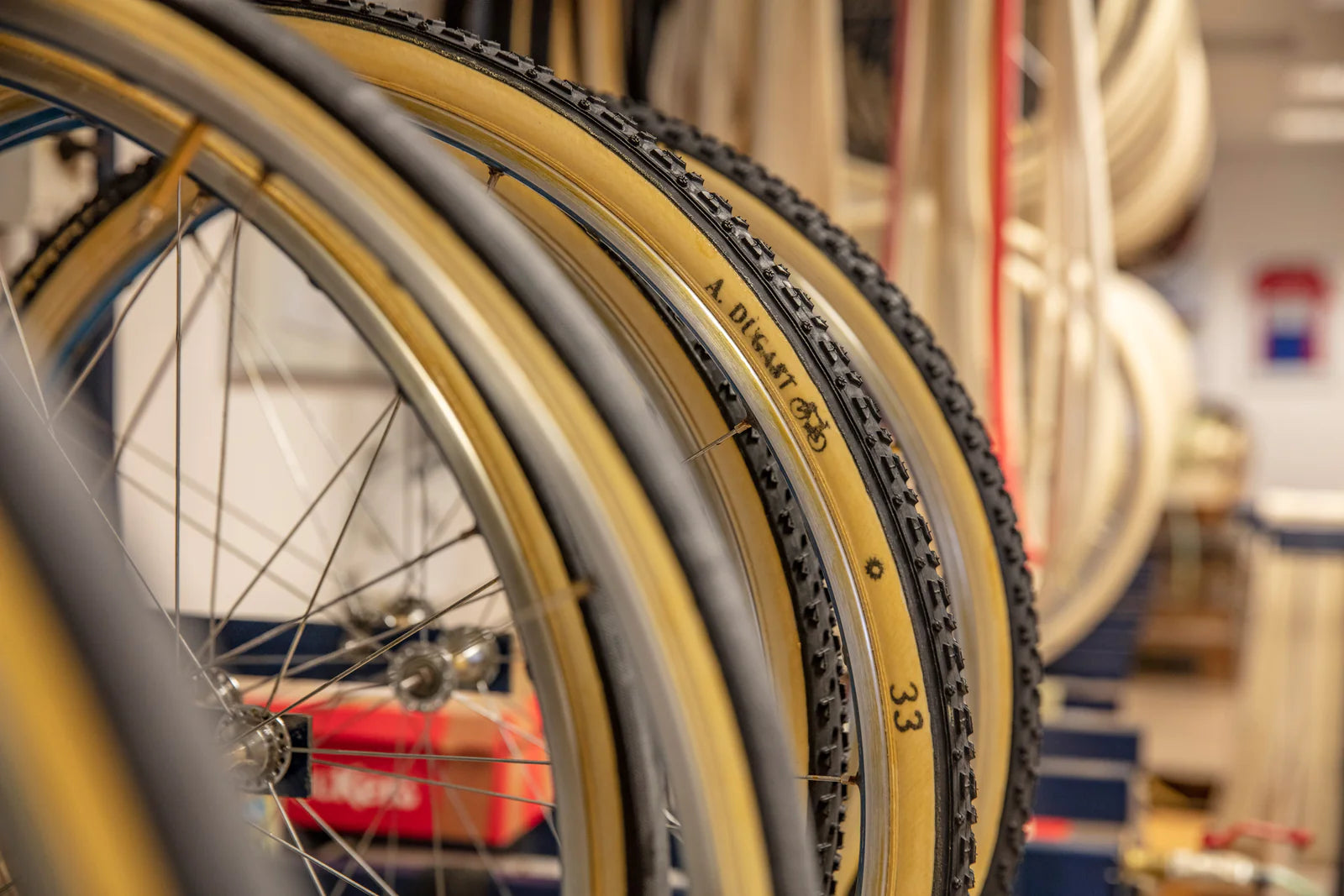
This is a high-performance compound that improves every essential quality required of a tire tread: reduced rolling resistance, increased grip, and enhanced puncture resistance and durability.
Dugast has incorporated this Monsoon compound into its standard Typhoon, Rhino, and Pipisquallo cyclocross tires, and has conducted repeated real-world testing since last season in partnership with top racers in the CX world. The test results provided feedback of lower rolling resistance, greater grip, and improved overall performance compared to conventional treads. Specifically, this means you can achieve the same ride feel even with tire pressure set one level higher than your usual setting, which in turn leads to the advantage of a lower risk of punctures.


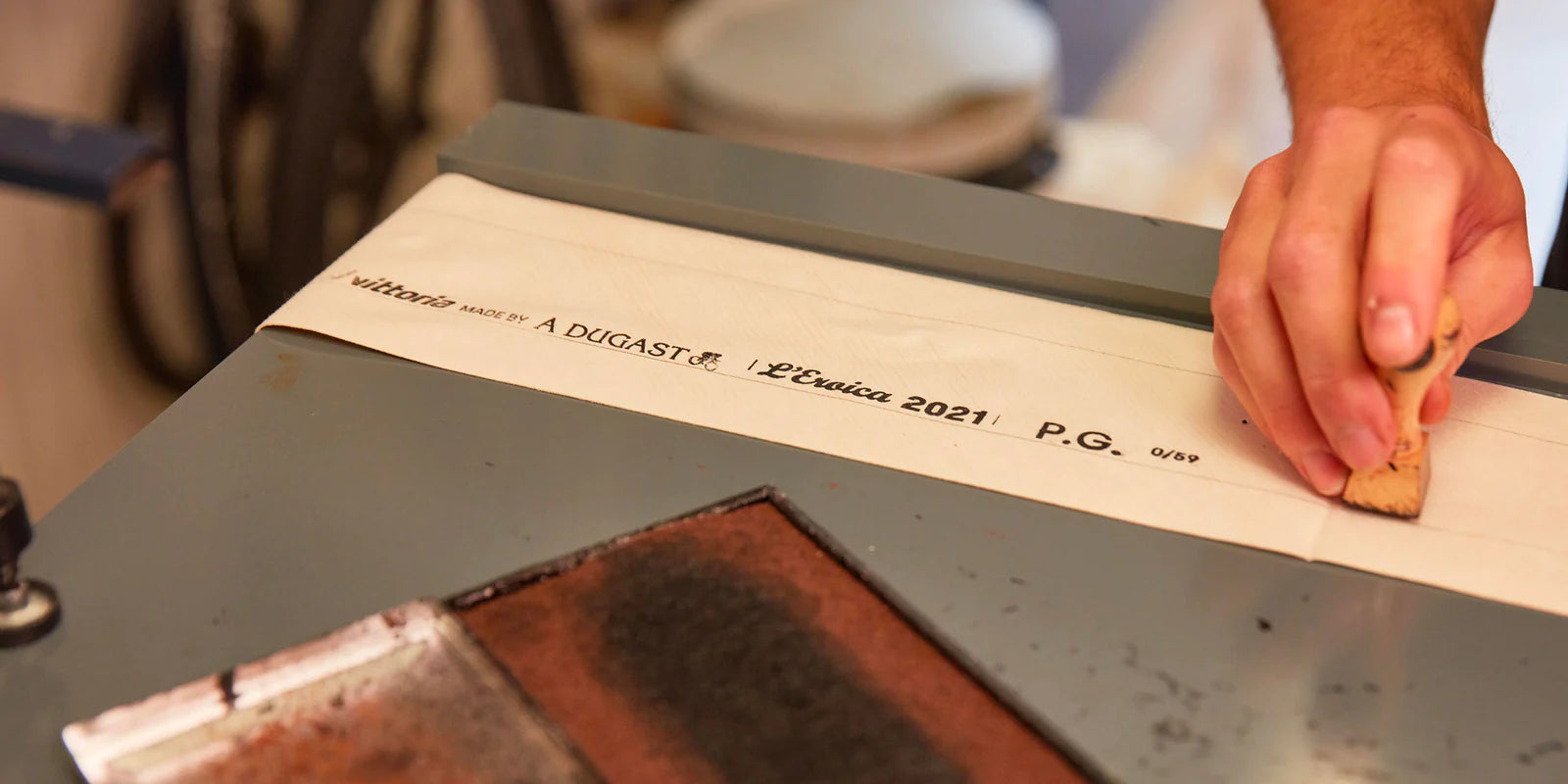
With the increasing popularity of disc brake wheels and wider tires, A Dugast now offers cyclocross tires with wider base tapes to ensure a better fit on wider rims.
The larger base tape provides increased protection for the tubular sidewall.
Dugast offers three different base tape widths:
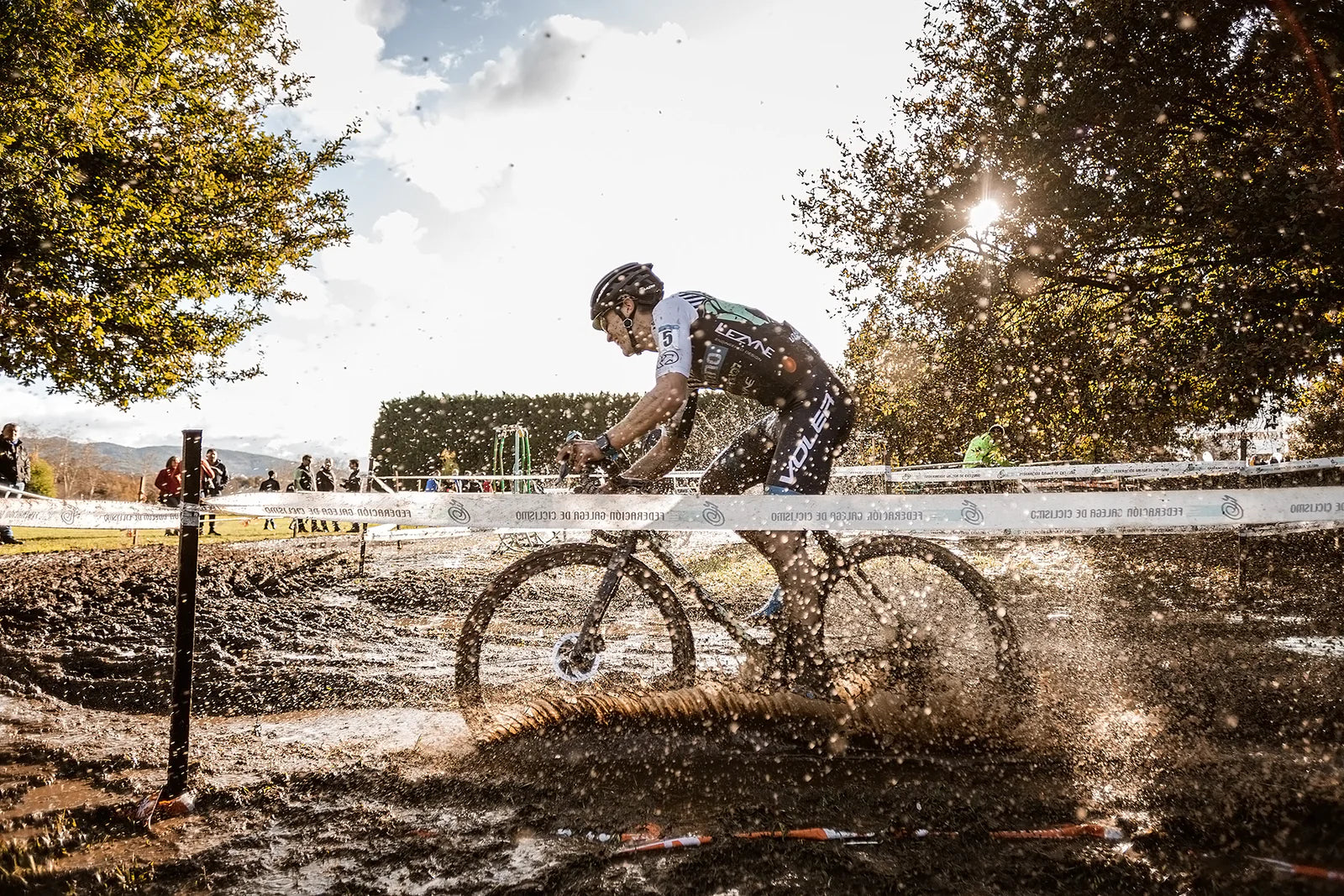
The neoprene coating is extremely thin and does not affect the functionality or comfort of the tubular, but maintenance is essential for long-term use.
Of course, it is possible to protect the tire sidewalls with Aquasure. If you do not wash the tires after use, we recommend using Aquasure.
A. Dugast clincher tires are made of 100% cotton, and we strongly recommend that you follow these instructions carefully to prevent air bubbles from forming under the tread.
Note: This product features a 100% cotton casing.
1. Remove any debris or old sealant from the inside of the rim.
2. Use high-quality tubeless rim tape that is suitable for tubeless tires and appropriate for the tire pressure indicated on the tire.
3. Insert the tubeless valve until the rubber base sits firmly and evenly on the rim tape.
4. After checking the direction of rotation for the wheel, install both beads onto the rim, ensuring that the entire bead is seated at the bottom of the rim profile.
*Tire rotation: The tire knobs must always be oriented correctly in the direction of travel.
5. Slowly inflate the tire to a maximum of 1 bar. The bead does not need to click into the rim. Remove the valve core using a valve tool. Inject the appropriate amount of sealant through the valve stem and reinstall the valve core.
6. Slowly inflate the tire again to a maximum of 1 bar. Carefully push any sections where the tire is not in the correct position inward so that the sealant distributes evenly between the bead and the rim. The sealant will act as a lubricant when you twist the tire to move the bead into its final position. Do not inflate beyond 1 bar.
7. If the tire is correctly seated, slowly inflate to 1.5 bar. Rotate the wheel in all directions to ensure the sealant is applied evenly.
*Never bounce the wheel.
Maintenance : Store in a dry place at room temperature, away from light. After every ride, be sure to remove any particles stuck in the tread, such as pebbles, glass, or metal, which could damage the casing. Clean the tires with fresh water. Even when not in use for an extended period, keep the valve at the top of the wheel and maintain a little air in the tire to prevent the valve from clogging. Rotate the wheel occasionally to ensure the sealant is distributed evenly inside the tire.

An all-purpose racing tire. Thanks to the integrated radius control function in the sidewall, the tire carves through unpaved corners. The specially designed tread delivers excellent grip in all conditions and is available only from Dugast.

Competition tire for mud courses.
Tread with very high knobs provides excellent grip.
Open tread design allows for immediate shedding of mud and debris, reducing rolling resistance.

Competition tire for mud courses.
Features a tread with extra-tall knobs for superior grip.
The open tread design instantly sheds mud and debris while reducing rolling resistance.

Competition tire for muddy courses.
Profile with very high studs that provide excellent grip. The profile design has a self-cleaning effect for mud. Despite the open tread design, rolling resistance remains low.

Everything you need for your Dugas is available here.
¥12,320
¥17,600

¥12,320
¥17,600

¥12,320
¥17,600

¥12,320
¥17,600
 SOLD OUT
¥13,090
¥15,400
 SOLD OUT
¥12,623
¥14,850